Formula details
Product Details
Overview
Decabromodiphenyl Ethane (DBDPE): Chemical Overview & Strategic Advantages
Are you struggling to balance strict global environmental compliance with high-temperature polymer processing demands? We manufacture and supply high-purity DBDPE (Decabromodiphenyl Ethane, CAS 84852-53-9), a premier additive brominated flame retardant engineered to deliver robust flammability protection without compromising material performance or regulatory status.
Product Definition
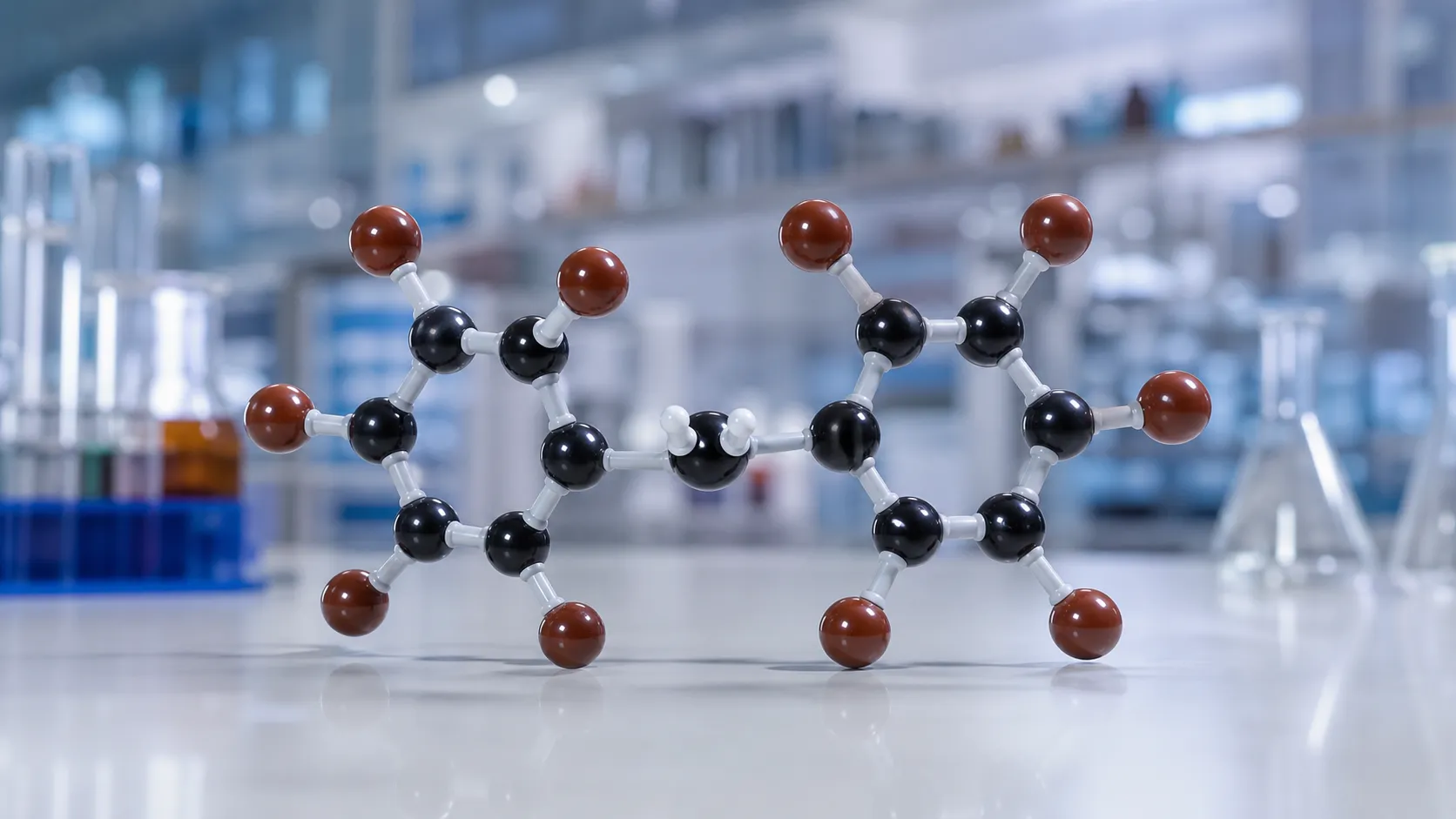
DBDPE (chemically designated as 1,2-Bis(pentabromophenyl)ethane) is a high bromine content flame retardant containing approximately 82% aromatic bromine. Its high chemical efficiency allows compounders and masterbatch producers to achieve targeted UL94 V-0 performance at optimized loading levels, directly lowering formulation costs.
Structural Safety Advantage
The key structural distinction of our DBDPE lies in its ethylene bridge linking two pentabromophenyl groups, replacing the ether linkage found in legacy flame retardants like DecaBDE.
- Zero Dioxin/Furan Formation: The absence of a diphenyl ether structure prevents the generation of hazardous polybrominated dibenzo-p-dioxins (PBDDs) and dibenzofurans (PBDFs) during thermal processing or combustion.
- Global Compliance Assurance: Fully aligned with EU RoHS, REACH SVHC, and global environmental standards, protecting your supply chain against premature regulatory bans.
Performance Attributes
We engineer our DBDPE to solve critical processing and aesthetic issues common in polymer compounding:
- Superior Thermal Stability: Maintains thermal integrity with a TGA 1% weight loss temperature exceeding 320°C, making it an exceptional thermal stability flame retardant for high-temperature engineering resins.
- Low Blooming & UV Resistance: Functions as a reliable non-blooming additive. Its low polymer solubility prevents migration, surface haze, and mold buildup, while offering superior UV and light stability.
- Recycling Compatibility: Resists thermal degradation across multiple reprocessing cycles, allowing post-industrial and post-consumer regrind to retain physical properties.
| Key Feature | DBDPE Technical Advantage | Operational & Economic Impact |
|---|---|---|
| 82% Bromine Content | High flame retardancy efficiency | Reduced additive dosage, lower raw material cost |
| Ethane Linkage | Zero hazardous dioxin/furan generation | Unrestricted global market access & REACH compliance |
| TGA 1% Loss > 320°C | Outstanding thermal endurance | Eliminates resin degradation & equipment corrosion |
| Non-Blooming Profile | Minimal surface migration | Clean mold tooling, premium surface finish |
Standard Technical Specifications & TGA Performance of DBDPE
We manufacture and supply DBDPE (CAS 84852-53-9) to strict quality standards, ensuring predictable batch-to-batch consistency for demanding polymer formulations. Our high bromine content flame retardant provides exceptional thermal resistance, making it ideal for high-temperature engineering plastics and wire insulation applications.
Chemical & Physical Specifications Table
The technical parameters below highlight the purity and physical properties of our commercial-grade 1,2-Bis(pentabromophenyl)ethane powder.
| Technical Parameter | Standard Specification | Testing Method |
|---|---|---|
| Chemical Name | 1,2-Bis(pentabromophenyl)ethane | ISO Standard |
| CAS Number | 84852-53-9 | — |
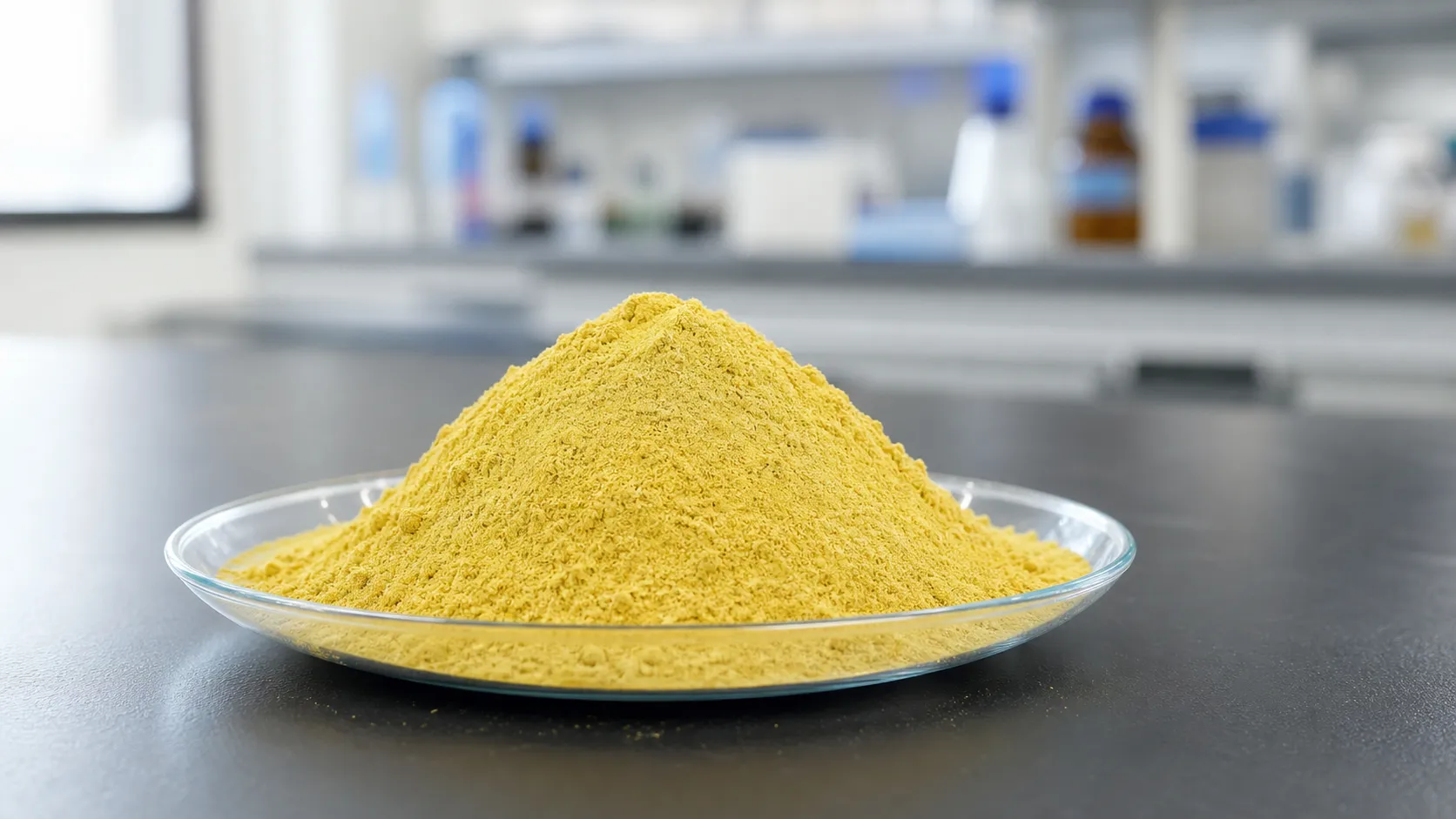
| Appearance | Fine white powder | Visual |
| Bromine Content | ≥ 82.0% | Volumetric Titration |
| Melting Point | ≥ 345°C | DSC |
| Volatile Matter | ≤ 0.10% | Gravimetric |
| Whiteness (Hunter L) | ≥ 92.0 | Colorimeter |
| Free Bromine | ≤ 10 ppm | Ion Chromatography |
| Particle Size (D50) | 3.0 – 5.0 µm | Laser Diffraction |
Thermogravimetric Analysis (TGA) Thermal Loss Profile
Processing modern engineering resins like ABS, HIPS, and polyolefins requires additives that can withstand extreme heat without breaking down. Our DBDPE features an outstanding thermal stability profile, preventing premature decomposition, acid release, or equipment corrosion during melt compounding.
- 1% Weight Loss: 325°C
- 5% Weight Loss: 345°C
- 10% Weight Loss: 362°C
- 50% Weight Loss: 410°C
This high thermal decomposition threshold guarantees that our additive brominated flame retardant stays fully intact throughout high-shear extrusion and high-temperature injection molding processes.
Industry Equivalent Cross-Reference Matrix
DBDPE Drop-In Compatibility Guide
Are you concerned about costly line re-tooling, batch inconsistency, or recalibrating your formulation when switching raw material suppliers? We engineered our high-purity DBDPE (Decabromodiphenyl Ethane, CAS 84852-53-9) to serve as a direct, 1:1 drop-in replacement for established global commercial grades. You can maintain your existing processing parameters while optimizing raw material procurement costs.
| Commercial Grade | Brand Owner | Our Product | Equivalency Level | Target Application Match |
|---|---|---|---|---|
| Saytex 8010 | Albemarle | Greenlano DBDPE | Direct Drop-In | HIPS, ABS, PBT, Polyolefins |
| FR-1410 | ICL Industrial Products | Greenlano DBDPE | Direct Drop-In | Wire & Cable, Engineering Plastics |
| Firemaster 2100 | Lanxess / Chemtura | Greenlano DBDPE | Direct Drop-In | Elastomers, Thermoplastics, Resins |
Zero-Downtime Transition Assurance
Switching to our Saytex 8010 equivalent or FR-1410 alternative requires zero modification to your compounding hardware or mold designs. We ensure complete operational continuity across all manufacturing stages:
- Identical Chemical Structure: Formulated as pure 1,2-Bis(pentabromophenyl)ethane, our product delivers the exact molecular weight and thermal profile required by standard compounding protocols.
- 1:1 Loading Ratios: Functioning as a high-performance additive brominated flame retardant, it allows you to substitute your existing Firemaster 2100 substitute at identical addition rates without altering your antimony trioxide synergist ratios.
- Uncompromised Processing: Designed for seamless integration into high-shear extruders, maintaining original melt flow indices, melt pressures, and torque profiles.
- Consistent Rheology: Tight control over particle size distribution prevents filter mesh clogging and guarantees uniform dispersion in ABS additive compounds and HIPS resin flame retardant masterbatches.
DBDPE Target Polymer Applications & Synergy Guidelines
Are you struggling to select an additive flame retardant that won't compromise mechanical strength or cause surface blooming during high-temperature extrusion? We engineer our DBDPE (Decabromodiphenyl Ethane, CAS 84852-53-9) to deliver high thermal performance across a broad range of thermoplastic and thermoset matrices.
Polymer Processing Compatibility
We design DBDPE to integrate smoothly into diverse polymer bases. Its high thermal stability prevents thermal breakdown during demanding processing windows:
- Engineering Plastics (ABS & HIPS): Serves as a primary HIPS resin flame retardant and high-efficiency ABS additive compound. It preserves impact resistance and surface gloss without affecting melt flow.
- Polyolefins (PE & PP): Ideal for polyolefin wire cable jacket insulation, thin films, and extruded pipes. Its non-blooming property keeps cable surfaces clear for printing or outer jacket bonding.
- Thermoplastic Elastomers (TPE & TPU): Maintains flexibility and elongation in TPE, TPU, and EVA compounds without thermal exudation or surface migration.
- Thermosets & Engineering Resins: Functions reliably in PBT, PET, unsaturated polyesters, and epoxy resins under elevated molding temperatures.
Formulation Synergy Guide
How do you maximize flame resistance while controlling additive loading and compounding costs? We recommend pairing DBDPE with specific synergistic agents to achieve UL 94 V-0 performance at lower dosage levels.
| Matrix Resin | DBDPE Dosage (%) | Synergist / Co-Additive | Synergist Dosage (%) | Target Flame Retardancy |
|---|---|---|---|---|
| HIPS Resin | 10% – 14% | Antimony Trioxide Synergist | 3% – 5% | UL 94 V-0 (1.6 mm) |
| ABS Compound | 12% – 16% | Antimony Trioxide Synergist | 4% – 6% | UL 94 V-0 (1.6 mm) |
| PP / PE Cable Jacket | 18% – 25% | Antimony Trioxide + Hydrotalcite | 5% – 8% | UL 94 V-0 / VW-1 |
| PBT / PET | 8% – 12% | Antimony Trioxide + PTFE Anti-dripping Agent | 3% – 5% | UL 94 V-0 (0.8 mm) |
Key Formulation Guidelines from Our Tech Team:
- Synergist Ratio: Maintain a 3:1 to 4:1 ratio of DBDPE to antimony trioxide synergist for optimum gas-phase radical scavenging.
- Drip Suppression: Incorporate 0.2% – 0.5% PTFE anti-dripping agent in thin-wall electrical housings to pass strict UL 94 V-0 non-dripping requirements.
- Dispersion Control: Pre-blending our micronized Decabromodiphenyl Ethane powder with carrier resin ensures uniform shear distribution and prevents particle specks in thin cable jackets.
Regulatory Compliance & Safety Profile of DBDPE

Are tightening environmental laws threatening your export products? Legacy flame retardants like DecaBDE face heavy bans globally, putting compounders under pressure to find legally sound materials. We supply DBDPE (Decabromodiphenyl Ethane, CAS 84852-53-9) as a fully compliant, high-efficiency additive that clears global trade barriers effortlessly.
Global Regulatory Clearance
We ensure our DBDPE meets all major international chemical management mandates, ensuring zero export disruptions:
- EU REACH Compliant: Fully registered and free from restricted substances under Annex XIV and XVII.
- RoHS Compliant: Strictly conforms to EU Directive 2011/65/EU; free of PBDEs and PBBs.
- US TSCA Inventory: Approved for commercial distribution across North America.
- Asia-Pacific Registrations: Listed on China IECSC, Japan ENCS, and Korea K-REACH inventories.
Toxicological & Environmental Safety
The unique ethylene-bridge structure of DBDPE provides distinct environmental advantages over legacy brominated additives. Because it lacks a diphenyl ether linkage, it cannot generate polybrominated dibenzo-p-dioxins (PBDDs) or dibenzofurans (PBDFs) during thermal degradation or incineration.
- Non-Bioaccumulative: Its high molecular weight (1023.2 g/mol) prevents absorption through biological membranes, rendering it non-toxic to aquatic and terrestrial life.
- Low Migration Risk: Superior matrix stability minimizes leaching into the surrounding environment during handling or end-use.
- Worker-Safe Handling: Low acute oral, dermal, and inhalation toxicity; verified through comprehensive MSDS and Technical Data Sheets.
Greenlano Quality Assurance & Logistics for DBDPE
Quality Assurance Infrastructure
Are inconsistent chemical batches causing unexpected downtime on your processing lines? We eliminate raw material variability so your compounding operations run smoothly. At Greenlano, every batch of DBDPE (Decabromodiphenyl Ethane, CAS 84852-53-9) undergoes strict laboratory testing before dispatch.
- Rigorous Lot Control: High-Performance Liquid Chromatography (HPLC) testing guarantees high purity levels and precise bromine content for consistent performance.
- Physical Property Testing: We verify whiteness, particle size distribution, and moisture content to ensure seamless dispersion in your polymer matrices.
- Full Compliance Documentation: Every shipment includes a batch-specific Certificate of Analysis (CoA), complete DBDPE Technical Data Sheet (TDS), and MSDS for simple regulatory verification.
Packaging Solutions
Moisture contamination and bag breakage during transit can ruin high-grade additives. We pack our additive brominated flame retardant in heavy-duty, moisture-proof packaging options engineered for long-distance transport and safe storage.
| Packaging Type | Specifications | Ideal Usage |
|---|---|---|
| Multi-Wall Paper Bags | 25 kg net weight with inner PE liner | Standard compounding setups and manual dosing |
| Jumbo Super Sacks | 500 kg / 1,000 kg bulk bags with PE liner | Automated feeding systems and high-volume extrusion |
| Palletized & Wrapped | ISPM-15 heat-treated pallets with stretch film | Rapid forklift handling and ocean transport protection |
Export & Container Loading Capabilities
High ocean freight costs and shipping delays directly impact your bottom line. We optimize our container loading configurations to give you maximum payload capacity per shipment while keeping your cargo safe.
- Maximized Load Density: Load up to 20 Metric Tons per 20'FCL (palletized) or up to 22 Metric Tons (unpalletized) to minimize per-ton freight expenses.
- Cargo Protection: Containers are sealed with heavy-duty desiccants and protective corner boards to prevent shifting and moisture damage during sea freight.
- Flexible Global Shipping: We support complete export customs documentation and flexible shipping terms (FOB, CIF, CFR, DDP) tailored to your local port requirements.
DBDPE Technical & Procurement FAQs
Can Greenlano DBDPE replace Saytex 8010 directly without re-tooling processing machinery?
Yes. Our Greenlano DBDPE (CAS 84852-53-9) serves as a direct drop-in Saytex 8010 equivalent and FR-1410 alternative. Because it shares the exact molecular formula of 1,2-Bis(pentabromophenyl)ethane and an identical 82% bromine content, you can execute a 1:1 substitution in your formulations. Processing parameters, melt temperatures, and screw profiles remain completely unchanged, eliminating equipment downtime and re-tooling costs.
How does DBDPE differ from DecaBDE chemically?
The core difference lies in the chemical bridge connecting the aromatic rings. DBDPE replaces the ether linkage (-O-) found in legacy DecaBDE with a stable ethylene bridge (-CH2-CH2-). This structural advantage delivers clear operational benefits:
- Regulatory Safety: Prevents the thermal degradation path that forms hazardous polybrominated dibenzo-p-dioxins and furans, keeping your products fully RoHS and REACH compliant.
- Property Retention: Eliminates surface blooming and offers significantly higher UV resistance and thermal stability during high-temperature melt processing.
What is the typical lead time for bulk international shipments?
We maintain ready-to-ship inventory buffers to guarantee supply chain continuity. Standard container orders dispatch from our facility within 7 to 10 business days after order confirmation.
| Destination Region | Average Transit Lead Time | Preferred Logistics Mode |
|---|---|---|
| Asia-Pacific | 5 – 10 Days | FCL / LCL Sea Freight |
| North America | 14 – 20 Days | Ocean Fast-Track Vessel |
| Europe | 18 – 25 Days | Direct Sea / Rail Freight |