Formula details
Product Details
Overview
Chemical Profile and Core Properties of N-Ethyl-2-phenylindole
As a versatile heterocyclic building block, N-Ethyl-2-phenylindole plays a critical role in modern organic synthesis, pharmaceutical R&D, and optoelectronic material development. We deliver this compound to meet exact technical specifications, ensuring high reactivity and reliable batch-to-batch consistency in advanced laboratory and industrial workflows.
Key Molecular Identifiers
- Chemical Name: N-Ethyl-2-phenylindole (1-Ethyl-2-phenyl-1H-indole)
- CAS Registry Number: 13228-39-2
- Molecular Formula: C16H15N
- Chemical Class: Substituted indole derivative / nitrogen heterocycle
Physical and Chemical Data
| Property | Specification / Value |
|---|---|
| Molar Mass | 221.30 g/mol |
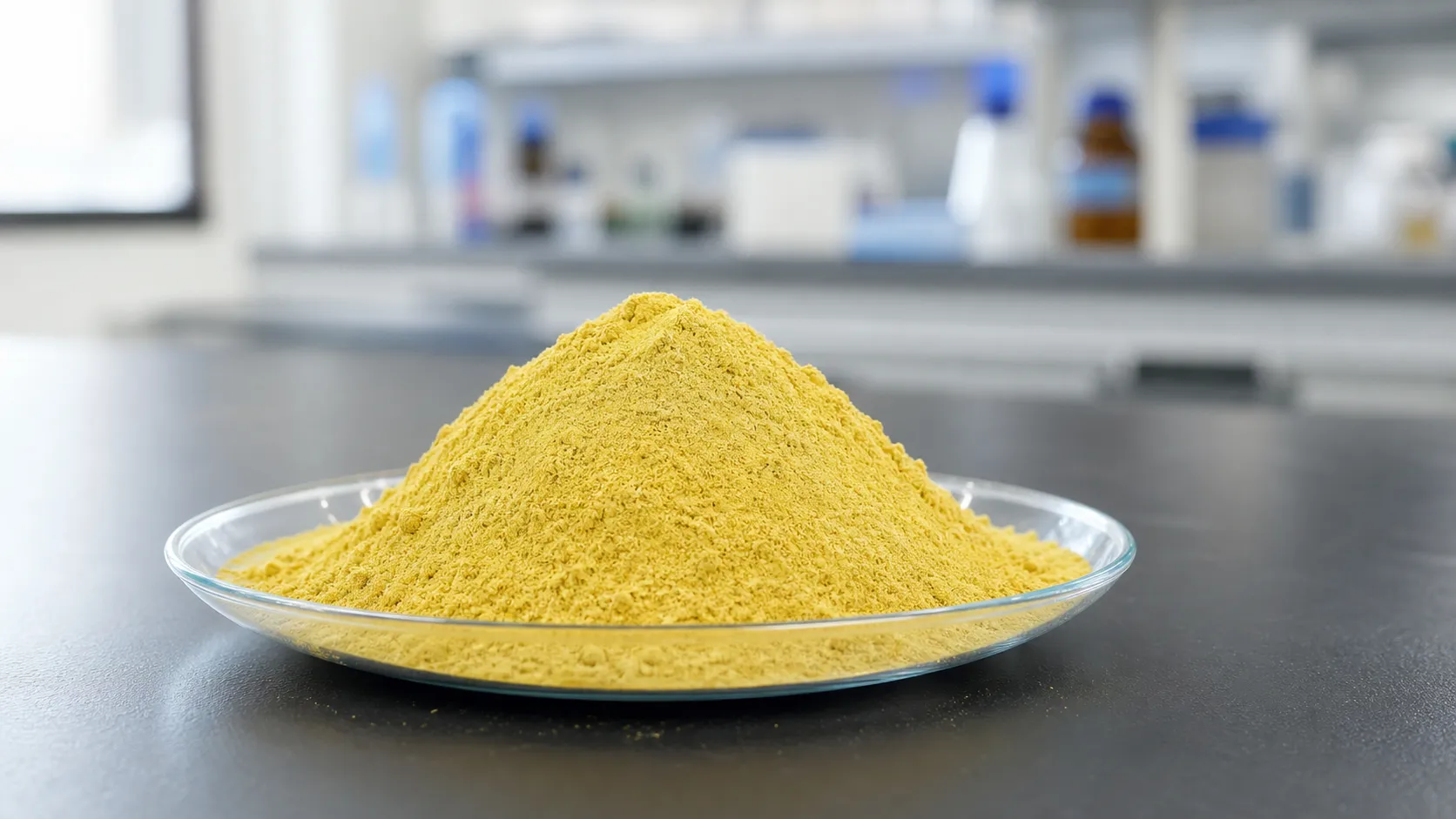
| Physical Appearance | Off-white to pale yellow crystalline powder |
| Melting Point | 88°C – 92°C |
| Physical State | Solid at room temperature |
Solubility Profile
Understanding the solubility behavior of N-Ethyl-2-phenylindole is essential for reaction design and downstream purification:
- Organic Solvents: Highly soluble in non-polar and moderately polar solvents such as dichloromethane (DCM), tetrahydrofuran (THF), chloroform, ethyl acetate, and toluene.
- Alcohols: Sparingly soluble in cold alcohols; moderately soluble in warm ethanol and methanol.
- Aqueous Systems: Practically insoluble in water due to the dominant hydrophobic character of the phenyl ring and N-ethyl indole backbone.
Industrial and Laboratory Purity Standards
We provide N-Ethyl-2-phenylindole tailored to rigorous analytical and synthetic standards:
- Standard Grade: ≥98.0% (HPLC grade) purity to guarantee clean baseline spectra and high reaction yields.
- Quality Assurance: Characterized via nuclear magnetic resonance (NMR) and mass spectrometry (MS) to verify structural integrity.
- Primary Target Uses: High-purity organic intermediate for active pharmaceutical ingredient (API) synthesis, fluorescent probes, and organic light-emitting diode (OLED) semiconductors.
Key Applications of N-Ethyl-2-phenylindole in Industry and Research
We supply high-purity N-Ethyl-2-phenylindole to commercial manufacturers and research laboratories worldwide. As versatile heterocyclic building blocks, these 2-phenylindole derivatives serve as fundamental components in advanced electronics, medicinal chemistry, and material science.
Pharmaceutical Intermediate Synthesis
- Core Molecular Scaffold: Operates as a critical component among pharmaceutical building blocks for complex active pharmaceutical ingredient (API) development.
- Targeted Drug Discovery: Provides an electron-rich aromatic core ideal for synthesizing potent therapeutic compounds, including antimicrobial and receptor-targeted agents.
- Streamlined Reactions: Simplifies multi-step indole derivative synthesis, boosting yields in target molecule pathways.
OLED and Optoelectronic Device Fabrication
- Charge Transport Layers: Functions as an effective organic semiconductor intermediate within organic light-emitting diodes (OLEDs).
- Thermal and Optical Efficiency: Serves as a vital component in OLED chemical materials, improving thermal stability and luminescent efficiency in display panels.
- Optoelectronic Flexibility: Facilitates tuneable energy levels in organic photovoltaics (OPVs) and field-effect transistors.
Fluorescent Probes and Biological Imaging
- Chromophore Precursor: Acts as a stable fluorescent dye intermediate for custom sensor design.
- Bio-Sensing & Cellular Tracking: Delivers robust photostability and sharp fluorescence response for imaging biological microenvironments.
- Targeted Assays: Allows straightforward modifications to bind specific biomolecules or detect intracellular changes.
Specialty Polymers and Agrochemical Scaffolds
- Crop Protection: Serves as a foundational scaffold in developing selective agrochemical formulations, herbicides, and fungicides.
- Performance Additives: Integrates into specialty polymer matrices to improve thermal resistance and photo-stability under harsh working conditions.
Application Summary Matrix
| Industry Field | Primary Function | Key Technical Advantage |
|---|---|---|
| Pharmaceuticals | Active intermediate & drug scaffold | High structural rigidity and chemical versatility |
| Optoelectronics | Charge transport / OLED host material | Excellent thermal stability and charge-carrier mobility |
| Biological Imaging | Fluorescent dye precursor | Strong emission intensity and high photostability |
| Agrochemicals & Polymers | Synthetic scaffold & specialty additive | Superior structural stability and environmental resistance |
Synthesis Routes and Laboratory Preparation of N-Ethyl-2-phenylindole
We synthesize high-purity N-Ethyl-2-phenylindole through two main, scalable synthetic pathways tailored to raw material availability and target production volumes.
Direct N-Alkylation Pathway
For fast, scalable indole derivative synthesis, we perform direct N-alkylation of indole intermediates using 2-phenylindole and standard ethylating reagents.
Deprotonation: Strong bases like sodium hydride (NaH) or potassium hydroxide (KOH) abstract the N-H proton cleanly.
Nucleophilic Substitution: The resulting anion reacts with ethyl iodide or bromoethane in polar aprotic solvents (DMF or DMSO) to form 1-Ethyl-2-phenylindole.
Key Advantage: Fast reaction times, straightforward workup, and consistently high chemical yields.
Fischer Indole Synthesis Pathway
When designing customized heterocyclic building blocks or specialized 2-Phenylindole derivatives from baseline starting materials, the Fischer indole pathway offers excellent utility.
Condense N-ethyl-N-phenylhydrazine with acetophenone under acid catalysis (using ZnCl2, polyphosphoric acid, or acetic acid).
Thermal cyclization via 3,3-sigmatropic rearrangement closes the ring to form 1-Ethyl-2-phenyl-1H-indole.
Reaction Parameter & Optimization Comparison
| Route | Key Reagents | Primary Solvents | Typical Yield | Core Process Advantage |
|---|---|---|---|---|
| N-Alkylation | 2-Phenylindole, Ethyl Iodide, NaH / KOH | DMF, DMSO | 85% – 95% | Fast conversion and high product purity |
| Fischer Indole | N-Ethyl-N-phenylhydrazine, Acetophenone, ZnCl2 | Ethanol, Acetic Acid | 70% – 82% | Ideal for custom substituted scaffolds |
Isolation and Purification Methods
To consistently supply an HPLC purity organic intermediate meeting or exceeding 98% purity standards, we utilize a strict two-step isolation process:
Column Chromatography: Flash silica gel column chromatography using a hexane/ethyl acetate eluent system rapidly removes unreacted starting materials and trace side-products.
Recrystallization: crystallization from hot ethanol or petroleum ether yields clean, bright yellow crystalline product ready for sensitive electronic or synthetic applications.
Storage, Handling, and Safety Specifications for N-Ethyl-2-phenylindole
We manage and store N-Ethyl-2-phenylindole (CAS 13228-39-2) to ensure long-term stability and high chemical purity from our facility to your laboratory. Adhering to strict storage and handling guidelines prevents degradation and maintains safety during synthesis and processing.
| Specification | Target Guideline / Requirement |
|---|---|
| Storage Temperature | Cool, dry environment under 15°C (59°F) |
| Atmosphere & Moisture | Sealed under inert gas (nitrogen or argon); moisture-free |
| Required PPE | Nitrile gloves, splash goggles, lab coat, safety footwear |
| Workspace Requirement | Class-certified chemical fume hood |
| Chemical Incompatibilities | Strong oxidizers, strong acids, direct heat, UV light |
Storage Conditions and Inert Gas Sealing
To extend shelf life and prevent oxidation of this indole derivative intermediate, maintain disciplined storage protocols:
- Temperature Control: Store the material in a specialized cold room or refrigerator kept under 15°C (59°F).
- Inert Gas Blanket: Purge opened containers with dry nitrogen or argon prior to resealing to exclude atmospheric air and humidity.
- Light Protection: Store in amber glass bottles or opaque containers shielded from direct sunlight and strong indoor light.
Handling Protocols and Personal Protective Equipment (PPE)
Proper handling minimizes exposure risks when transferring or weighing N-Ethyl-2-phenylindole in batch processes:
- Fume Hood Operation: Measure and handle the solid intermediate exclusively inside a functioning chemical fume hood to prevent dust inhalation.
- Personal Protection: Wear standard chemical-resistant nitrile gloves, safety glasses with side shields, and a protective laboratory coat.
- Hygiene Practices: Avoid direct contact with skin and eyes. Wash hands thoroughly after handling bulk chemical packages.
Thermal Stability and Hazard Precautions
While N-Ethyl-2-phenylindole remains stable under recommended low-temperature storage, observe key stability and reactivity cautions:
- Reactivity Risks: Keep isolated from strong oxidizing agents and heavy acids to avoid undesired chemical reactions.
- Thermal Limits: Keep clear of open flames, sparks, and high heat sources. Thermal decomposition can yield hazardous fumes, including carbon oxides and nitrogen oxides.
- Spill Cleanup: In the event of a spill, avoid creating dust. Carefully sweep or vacuum the material into a labeled, sealed container for safe hazardous waste disposal.
Sourcing and Quality-Checking N-Ethyl-2-phenylindole
When procuring N-Ethyl-2-phenylindole (CAS 13228-39-2) for research or scaled industrial manufacturing, verifying batch consistency is critical. We prioritize strict quality assurance to ensure every batch meets global industrial standards.
Key Specifications on the Certificate of Analysis (CoA)
Before accepting any shipment of this HPLC purity organic intermediate, verify these core parameters on the manufacturer's CoA:
- Purity Level: Verified at ≥98.0% purity via HPLC assay.
- Structural Identity: Confirmed using 1H-NMR and FT-IR spectroscopy.
- Physical Appearance: Consistent off-white to yellow crystalline powder.
- Moisture & Volatiles: Moisture content kept below 0.5% (via Karl Fischer titration).
- Impurity Profile: Individual unspecified impurities capped under 0.5%.
Lab-Scale vs. Commercial Bulk Sourcing
Sourcing requirements shift significantly between early-stage R&D and commercial production.
| Parameter | Lab-Scale Quantities | Commercial Bulk Production |
|---|---|---|
| Typical Order Size | 5g – 1kg | 25kg – 1000kg+ |
| Primary Focus | Rapid screening, intermediate synthesis | Cost efficiency, continuous supply chain |
| Packaging Type | Sealed amber glass bottles / foil pouches | Standard fiber drums with double PE liners |
| Lead Time | In stock (ships within 24–48 hours) | 2–4 weeks for tailored batch production |
| Testing | Standard analytical CoA | Batch-specific COA, chain-of-custody tracking |
Supplier Selection, Custom Synthesis, and Compliance
Partnering with certified chemical suppliers guarantees consistent quality and smooth shipping logistics for 1-Ethyl-2-phenylindole.
- Vendor Certification: Ensure your supplier operates under ISO 9001 quality management standards with complete REACH and TSCA compliance.
- Custom Synthesis Options: For specific purity thresholds, specialized particle sizing, or custom packaging specifications, request custom synthesis options early in the procurement phase.
- Regulatory & Logistics Clearances: Verify that all shipments include updated Safety Data Sheets (SDS), correct Harmonized System (HS) code labeling, and compliant international hazard packaging (IATA/IMDG guidelines) to prevent customs delays.
Frequently Asked Questions About N-Ethyl-2-phenylindole
What is the CAS registry number for N-Ethyl-2-phenylindole?
The official CAS registry number for N-Ethyl-2-phenylindole is 13228-39-2. You will also find this compound listed as 1-Ethyl-2-phenylindole or 1-Ethyl-2-phenyl-1H-indole across chemical databases, with the molecular formula C16H15N.
What is N-Ethyl-2-phenylindole used for in organic synthesis?
We supply N-Ethyl-2-phenylindole as a versatile heterocyclic building block across several high-tech industries. Core applications include:
- Pharmaceutical intermediates: Serving as a primary structural core for advanced 2-phenylindole derivatives and drug discovery compounds.
- Optoelectronic materials: Fabricating OLED chemical materials and organic semiconductor devices.
- Fluorescent dye intermediates: Developing specialized probes for biological imaging and sensing applications.
Is N-Ethyl-2-phenylindole soluble in water or organic solvents?
N-Ethyl-2-phenylindole is practically insoluble in water due to its non-polar aromatic framework. However, it readily dissolves in most common organic solvents, making it easy to process in synthesis:
| Solvent Type | Solubility Level |
|---|---|
| Water | Insoluble |
| Dichloromethane (DCM) | High |
| Tetrahydrofuran (THF) | High |
| Toluene & Chloroform | High |
| Ethanol & Ethyl Acetate | Moderate to High |
How should N-Ethyl-2-phenylindole be stored long-term?
To maintain a ≥98% HPLC purity organic intermediate standard over extended periods, follow these strict storage guidelines:
- Temperature: Keep in a cool environment, ideally under 15°C (59°F).
- Atmosphere: Store under an inert gas seal (nitrogen or argon) to prevent oxidation.
- Light & Moisture: Keep the container tightly sealed in a dry, dark place away from direct sunlight and strong oxidizing agents.