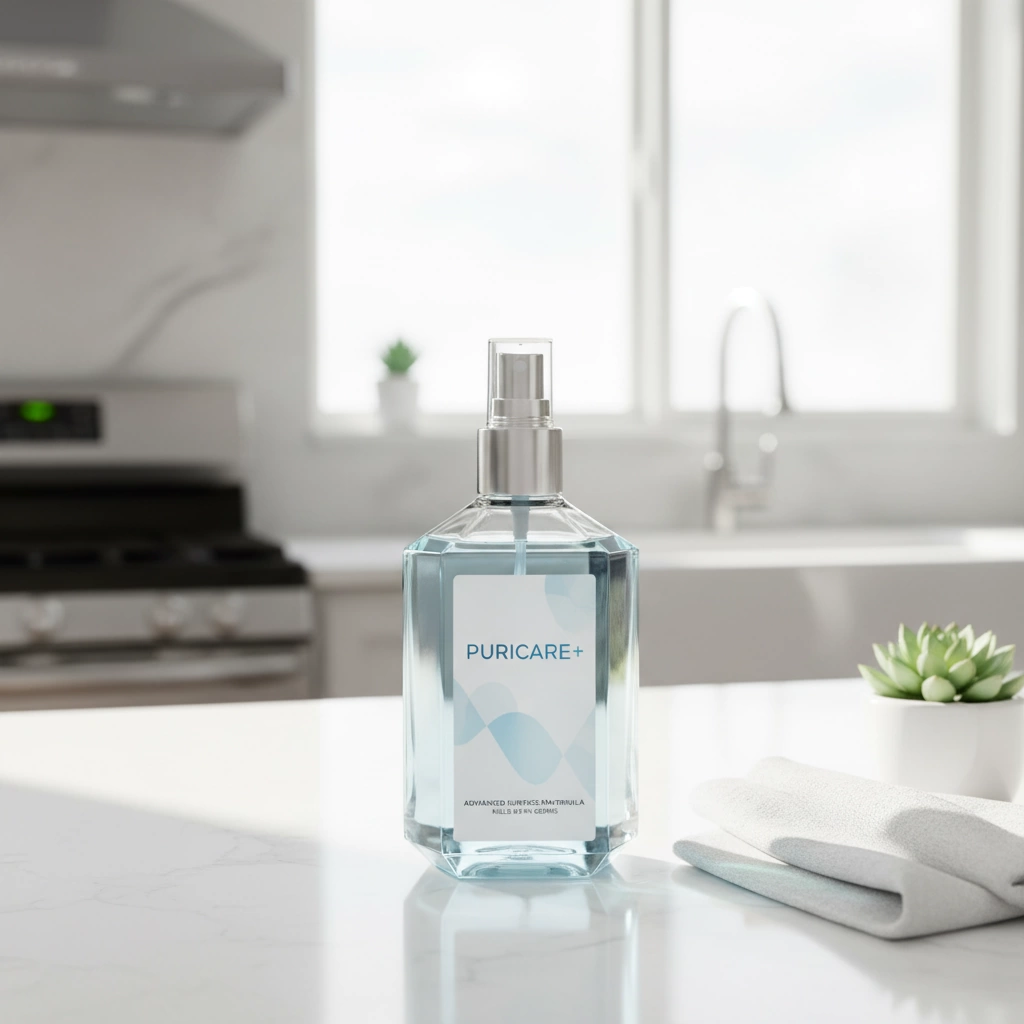
What is the Gotrays Quaternary Ammonium Compound Agent?
At Gotrays, we define our Quaternary Ammonium Compound Antibacterial Agent as a next-generation Cationic Surfactant Biocide engineered specifically for the rigors of modern manufacturing. Unlike generic disinfectants that degrade rapidly under stress, our solution is a robust Polymer Antimicrobial Additive designed to survive high-temperature processing while maintaining permanent biocidal activity.
We have moved beyond simple surface sprays to create a Quaternary Ammonium Salt that integrates directly into the material matrix. By leveraging the natural cationic charge of the molecule, our agent acts as a “molecular sword,” physically disrupting the cell membranes of bacteria and fungi upon contact. This ensures that products—from medical devices to home appliances—remain hygienically clean without relying on toxic chemicals that leach out over time.
Core Characteristics of Our Formulation:
- High Thermal Stability: Engineered to withstand processing temperatures up to 280°C–300°C, making it ideal for injection molding and extrusion.
- Broad-Spectrum Efficacy: Provides powerful inhibition against Gram-positive bacteria (like S. aureus), Gram-negative bacteria (like E. coli), and various molds.
- Permanent Protection: Functions as a Non-leaching Antibacterial Agent, meaning it chemically bonds or physically locks into the substrate for long-lasting performance.
- Industrial Versatility: Available in fine powder or liquid forms to suit diverse manufacturing lines, including plastics, textiles, and coatings.
Why Choose Gotrays QAC Over Standard Biocides?
Solving Thermal Instability and Leaching Issues
In modern manufacturing, standard antimicrobial additives often fail where it counts: durability and processing limits. We developed our Quaternary Ammonium Compound Antibacterial Agent specifically to overcome the weaknesses of traditional organic biocides. While generic options might degrade under heat or wash away over time, our solution is engineered for industrial resilience.
Most competitors offer agents that decompose at typical processing temperatures, leading to discoloration and loss of efficacy. Our Heat-Stable Biocidal Agent is different. It withstands processing temperatures up to 280°C–300°C, making it perfectly suited for high-heat injection molding and extrusion without compromising the material’s physical properties or appearance.
The Non-Leaching Advantage
Safety and longevity are our top priorities. Many standard biocides rely on migration to work, meaning they slowly leach out of the plastic or coating. This not only reduces effectiveness over time but also raises safety concerns.
Our Non-leaching Antibacterial Agent technology ensures the active ingredients are chemically bonded or physically trapped within the substrate. This creates a Polymer Antimicrobial Additive that provides permanent protection without migrating to the surface or washing out, ensuring the product remains safe and active for its entire lifecycle.
Comparison: Standard Biocides vs. Gotrays QAC
| Feature | Standard Organic Biocides | Gotrays QAC Agent |
|---|---|---|
| Thermal Stability | Decomposes < 200°C | Stable up to 280°C–300°C |
| Durability | Migrates and washes out | Non-leaching & Permanent |
| Safety Profile | Potential skin irritation | Non-toxic (LD50 > 5000 mg/kg) |
| Aesthetic Impact | Causes yellowing/haze | High transparency, no color change |
| Efficacy | Limited spectrum | Broad-Spectrum Bactericide |
By choosing our Cationic Surfactant Biocide, you are opting for a solution that maintains high transparency and mechanical strength while delivering consistent, long-term defense against microbes.
Mechanism of Action: The Science Behind the Kill
Our approach to microbial control is fundamentally different from traditional toxins. Instead of relying on chemical poisoning that can leach out or lose potency, our Quaternary Ammonium Compound Antibacterial Agent utilizes a physical “contact-killing” mechanism. This ensures long-lasting protection without releasing harmful substances into the environment.
Physical Disruption and Cationic Adsorption
The science relies on the powerful positive charge of the cationic surfactant. Since most bacterial cell walls—including those of Gram-positive bacteria—carry a negative charge, they are naturally attracted to our treated surfaces. Here is how the elimination process works:
- Adsorption: The Quaternary Ammonium Salt anchored in the material attracts the bacteria via electrostatic forces.
- Penetration: The long carbon chain of the agent acts like a microscopic spike, piercing the microbial cell wall.
- Disruption: This physical puncture disrupts the cell membrane’s structural integrity.
- Lysis: The damage causes the cytoplasm to leak out, resulting in the immediate death of the microorganism.
Because this is a physical interaction rather than a chemical consumption, the broad-spectrum bactericide remains active on the surface. It does not get “used up” after killing a microbe, providing a permanent, non-leaching antibacterial solution that prevents the development of resistant superbugs.
Key Features and Technical Benefits
Our Quaternary Ammonium Compound Antibacterial Agent is engineered to solve the biggest headaches in polymer processing: heat degradation and safety concerns. Unlike traditional organic agents that break down under high heat, our Heat-Stable Biocidal Agent maintains structural integrity up to 300°C. This makes it the perfect Polymer Antimicrobial Additive for high-temperature injection molding, melt-blown fabrics, and extrusion processes.
We don’t rely on migrating chemicals. Our Non-leaching Antibacterial Agent physically locks into the matrix, providing permanent protection that doesn’t wash away, leach into the environment, or irritate the skin.
Why Our Technology Stands Out
- Extreme Thermal Stability: Withstands processing temperatures of 280°C–300°C, ensuring no discoloration or loss of efficacy during manufacturing.
- Broad-Spectrum Bactericide: Delivers a strong kill rate against Gram-positive bacteria (like S. aureus), Gram-negative bacteria (like E. coli), and various molds.
- Physical Kill Mechanism: Uses cationic interaction to disrupt microbial cell membranes, preventing bacteria from developing drug resistance.
- High Safety Profile: Our formula is practically non-toxic with an LD50 > 5000 mg/kg, making it safe for high-touch consumer goods and medical devices.
Technical Performance Snapshot
| Feature | Specification | User Benefit |
|---|---|---|
| Active Content | ≥ 99% Purity | Maximum potency at low dosage (0.5% – 1.5%) |
| Particle Size | D50 < 2 μm | Disperses easily without affecting material transparency |
| Durability | Non-Leaching | Permanent antimicrobial effect that won’t migrate |
| pH Stability | Broad Range | Compatible with various acidic and alkaline environments |
By integrating this Quaternary Ammonium Salt technology, manufacturers get a solution that is tough on microbes but gentle on the base material, preserving the mechanical properties and aesthetics of the final product.
Technical Specifications and Data Sheet
Transparency is key when selecting a Quaternary Ammonium Compound Antibacterial Agent for industrial manufacturing. We engineer our additives to meet rigorous standards, ensuring consistent performance in high-demand applications like plastic extrusion and coating formulation.
Our QACs Antimicrobial Additive is characterized by high purity and exceptional thermal resilience. Below are the core technical parameters for our flagship series.
Physical and Chemical Properties
| Parameter | Specification |
|---|---|
| Appearance | Fine White Powder or Transparent Liquid |
| Active Content Purity | ≥ 99% (Powder form) |
| Thermal Stability | Stable up to 280°C – 300°C |
| Particle Size (D50) | < 2 μm (Ensures smooth dispersion) |
| Safety Profile (LD50) | > 5000 mg/kg (Non-toxic classification) |
| Ionic Character | Cationic Surfactant |
Stability and Resistance
Unlike standard biocides that degrade under processing stress, our Heat-Stable Biocidal Agent maintains structural integrity during manufacturing.
- Thermal Decomposition: Engineered to withstand injection molding and extrusion temperatures without yellowing or losing potency.
- Chemical Resistance: Exhibits excellent stability against UV radiation, strong acids, and alkalis.
- Solubility: Designed for compatibility with various polymer matrices, acting as a Quaternary Ammonium Salt that physically bonds to the substrate rather than migrating out.
Industrial Applications for QAC Antimicrobial Additives
We engineered our Quaternary Ammonium Compound Antibacterial Agent to be a versatile workhorse across multiple industries. Unlike standard biocides that degrade under heat, our HIP series maintains stability up to 300°C, allowing us to integrate powerful hygiene protection directly into the manufacturing process without slowing down production lines.
Here is where our Polymer Antimicrobial Additive delivers the most value:
- Consumer Goods & Appliances: We extensively supply manufacturers of refrigerators, washing machines, and kitchenware. Our additive blends seamlessly into the plastic matrix during injection molding, ensuring high-touch surfaces remain hygienic for the product’s lifespan.
- Medical & Healthcare: Safety is non-negotiable in clinical settings. Our agents are used in hospital furniture and medical devices, functioning as a permanent Surface Disinfection Chemical that continuously disrupts bacterial cell membranes to prevent cross-contamination.
- Building Materials: From synthetic flooring to water pipes, our Industrial Disinfectant Raw Material technology prevents mold and bacterial growth in infrastructure that is difficult to clean manually.
- Textiles: We provide solutions for functional fibers and non-woven fabrics. The cationic nature of our agent ensures it bonds strongly to the textile, creating a Long-acting Antimicrobial Coating that doesn’t wash out.
QAC vs. Silver Ion Agents: A Cost-Performance Comparison
When selecting an antimicrobial additive, the choice often comes down to our Quaternary Ammonium Compound Antibacterial Agent versus traditional silver ion solutions. While silver has a long history, our QAC technology offers distinct advantages in reaction speed, aesthetic stability, and overall value for industrial manufacturing.
Speed of Action: Contact Kill vs. Ion Release
Silver agents rely on the slow release of ions to penetrate bacterial walls and disrupt metabolism. This process requires time and moisture to be effective. In contrast, our Cationic Surfactant Biocide functions through a physical contact-killing mechanism. The positively charged QAC molecules attract the negatively charged bacterial cell membranes, rupturing them instantly upon contact. This provides immediate protection without the lag time associated with metal ions.
Material Compatibility and Aesthetics
A major drawback of silver additives is their tendency to oxidize, which causes yellowing or discoloration in plastics and coatings over time. Our Quaternary Ammonium Salt formulations are chemically stable and highly transparent. They do not alter the color or mechanical properties of the base material, ensuring that clear plastics remain clear and white appliances stay white.
Cost-Effectiveness
Silver is a precious metal, making it an expensive raw material with fluctuating market prices. Our synthetic QACs Antimicrobial Additive provides a stable, cost-effective alternative. It delivers permanent, broad-spectrum efficacy at a significantly lower dosage cost, making it the smarter choice for high-volume production.
Comparison Table: QAC vs. Silver Ion
| Feature | Hi-Pleastic QAC Agent | Silver Ion Agent |
|---|---|---|
| Kill Mechanism | Physical cell membrane disruption | Chemical ion release |
| Reaction Speed | Immediate (Contact kill) | Slow (Gradual release) |
| Color Stability | High (No discoloration) | Low (Risk of yellowing/oxidation) |
| Cost Profile | Economical | High (Precious metal based) |
| Durability | Non-leaching (Permanent) | Migratory (Can wash out) |
Processing Guidelines and Incorporation Methods
Integrating our Quaternary Ammonium Compound Antibacterial Agent into your production line is seamless. We engineered these additives to be compatible with standard industrial processes, ensuring you don’t need to alter your existing machinery or workflow. Whether you are producing Antimicrobial Masterbatch for Plastics or functional coatings, consistency is key.
Recommended Dosage Rates
For the majority of applications, we recommend an addition rate between 0.5% and 1.5% by weight. This range ensures potent antimicrobial performance without compromising the mechanical properties or transparency of the base material.
- Plastics & Polymers: 0.5% – 1.0%
- Coatings & Textiles: 1.0% – 1.5%
Mixing and Temperature Control
Our Heat-Stable Biocidal Agent is designed to withstand high processing temperatures, making it a reliable choice for injection molding and extrusion.
- Thermal Stability: Remains stable and active at temperatures up to 280°C–300°C, preventing decomposition during high-heat manufacturing.
- Dispersion: With a particle size typically under 2 μm, the powder disperses evenly without clumping.
- Method: Pre-mix the Polymer Antimicrobial Additive with resin pellets or liquid bases before the heating stage to ensure a uniform distribution throughout the final product.
Storage Protocols
To maintain the efficacy of the Quaternary Ammonium Salt, store the product in a cool, dry place away from direct sunlight. Proper sealing prevents moisture absorption, ensuring the cationic surfactant remains active and ready for your next production run.
Regulatory Compliance and Safety Standards
At Hi-Pleastic, we understand that safety is just as critical as performance. Our Quaternary Ammonium Compound Antibacterial Agent is engineered to meet rigorous international safety standards, ensuring your products can navigate global markets like those governed by FDA, EPA, and REACH requirements without hurdles. Unlike traditional biocides that may carry heavy toxicity warnings, our additives are designed with a focus on human and environmental safety.
We prioritize a high safety profile to ensure our antimicrobial additives are suitable for sensitive applications, including medical devices and consumer electronics. Our rigorous testing confirms that our QAC solutions are practically non-toxic and safe for handling and end-use.
Key Safety and Compliance Metrics:
- Acute Oral Toxicity: Our compounds boast an LD50 > 5000 mg/kg, classifying them as practically non-toxic according to standard safety protocols.
- Skin Compatibility: The formulation is non-irritating to the skin, making it an ideal choice for textiles and high-touch plastic surfaces.
- Non-Leaching Stability: Because the agent chemically bonds or physically locks into the matrix, it does not migrate or leach out, preventing environmental contamination and ensuring long-term compliance.
- Global Standard Alignment: Our manufacturing processes and product specifications align with major international health and safety regulations, facilitating smoother certification for your final products.
Frequently Asked Questions About QAC Agents
Will the additive affect the transparency or appearance of my product?
No, it won’t. Our Quaternary Ammonium Compound Antibacterial Agent is engineered with an ultra-fine particle size (typically D50 < 1-2 μm). This ensures high transparency and allows the additive to integrate seamlessly into the matrix without altering the color or mechanical properties of the base material. It is an ideal choice for applications requiring a pristine aesthetic finish.
Is this QACs Antimicrobial Additive safe for skin contact?
Yes, safety is a priority in our formulation. The agent is practically non-toxic (LD50 > 5000 mg/kg) and non-irritating to the skin. This high safety profile makes it suitable for sensitive applications, including medical devices, hospital furniture, and consumer goods that require frequent handling.
Does the antimicrobial effect diminish over time?
Unlike traditional biocides that migrate to the surface, our solution acts as a Non-leaching Antibacterial Agent. The active ingredients are physically trapped or chemically bonded within the substrate. This ensures permanent, long-term protection that does not wash out or degrade, providing consistent defense against Gram-positive and Gram-negative bacteria throughout the product’s lifecycle.
Is it compatible with high-temperature manufacturing?
Absolutely. We designed this Polymer Antimicrobial Additive to withstand rigorous industrial processing. It maintains thermal stability up to 280°C–300°C, meaning it will not decompose or cause discoloration during injection molding or extrusion processes.
Reviews
There are no reviews yet.