What is Antioxidant 168?
Antioxidant 168 is a high-performance organophosphite processing stabilizer widely recognized in the polymer industry for its exceptional ability to protect plastics during high-temperature manufacturing. Chemically known as Tris(2,4-di-tert-butylphenyl) phosphite (CAS 31570-04-4), this additive functions as a secondary antioxidant.
Unlike primary antioxidants that provide long-term heat stability, Antioxidant 168 is specifically engineered to maintain the integrity of the polymer melt. It prevents degradation—such as discoloration and changes in molecular weight—during critical processing phases like extrusion, compounding, and injection molding. By reacting rapidly with hydroperoxides formed during auto-oxidation, it ensures the resin retains its original physical properties and color stability.
Key Characteristics:
- Chemical Name: Tris(2,4-di-tert-butylphenyl) phosphite
- CAS Number: 31570-04-4
- Classification: Secondary Antioxidant / Phosphite Processing Stabilizer
- Primary Function: Decomposes hydroperoxides to prevent processing-induced degradation.
Product Overview and Chemical Mechanism
We supply Antioxidant 168 as a high-performance organophosphite processing stabilizer. While primary antioxidants protect the finished product over time, this secondary antioxidant works immediately during the manufacturing phase to protect polymers when heat and shear stress are at their highest.
The core mechanism of CAS 31570-04-4 relies on its ability to act as a hydroperoxide decomposer. When plastics undergo high-temperature processing (like extrusion or injection molding), they form unstable hydroperoxides that lead to chain scission and cross-linking. Our product reacts rapidly with these harmful byproducts, converting them into stable non-reactive alcohols.
Key protective functions include:
- Inhibiting Auto-Oxidation: Stops the degradation cycle before it accelerates.
- Color Stability: Prevents the “yellowing” often caused by thermal stress.
- Melt Flow Protection: Maintains the original viscosity and molecular weight of the resin.
By stabilizing the polymer melt, we ensure that the material retains its physical integrity from the extruder die to the final molded part.
Technical Specifications of Antioxidant 168
At Gotrays, we ensure our Antioxidant 168 meets rigorous industrial standards to guarantee consistent performance in your polymer processing. We understand that high purity is non-negotiable for maintaining the physical properties of your plastics.
Our CAS 31570-04-4 supply is strictly quality-controlled, ensuring low volatility and excellent solubility. Below is the standard specification sheet for our premium grade material.
Physical Properties & Data Table
| Property | Specification |
|---|---|
| Chemical Name | Tris(2,4-di-tert-butylphenyl) phosphite |
| Appearance | White Powder or Granule |
| Assay (Purity) | ≥ 99.0% |
| Melting Range | 183.0°C – 187.0°C |
| Volatile Content | ≤ 0.3% |
| Solubility | Soluble in Toluene/Hexane; Insoluble in Water |
| Solution Clarity | Clear (10g/100ml Toluene) |
Key Quality Indicators:
- High Purity: With an assay of ≥ 99.0%, we minimize impurities that could cause color issues or plate-out during extrusion.
- Thermal Consistency: The specific melting range ensures the additive disperses evenly at standard processing temperatures without degrading.
- Low Volatiles: Keeping volatile content below 0.3% prevents bubble formation and ensures the stabilizer stays in the resin during high-heat cycles.
Key Features and Performance Advantages
When we supply Antioxidant 168, we focus on delivering a stabilizer that solves the most common processing headaches: moisture sensitivity and thermal degradation. Our product is engineered to ensure your polymer formulations maintain their integrity from the hopper to the final part.
Here is why this phosphite processing stabilizer stands out in the market:
-
Superior Hydrolytic Stability
Unlike standard phosphites that can clump or degrade when exposed to humidity, Antioxidant 168 offers excellent resistance to hydrolysis. This stability ensures a longer shelf life and easier handling in your facility, even in humid environments. -
Low Volatility at High Temperatures
Processing plastics requires intense heat. Our product is designed with low volatility, meaning it does not evaporate or plate out during high-temperature extrusion or injection molding. It stays within the polymer matrix where it belongs, providing consistent protection. -
Effective Color Protection
Yellowing is a major quality defect in polymer thermal degradation. By efficiently decomposing hydroperoxides, this additive prevents discoloration, ensuring your end products retain their natural color and transparency.
Performance
| Feature | Manufacturing Benefit |
|---|---|
| Hydrolytic Resistance | Stable in storage; resists moisture absorption. |
| Thermal Stability | Withstands aggressive heat cycles without losing efficacy. |
| Melt Flow Protection | Maintains stable viscosity and prevents cross-linking. |
| Broad Compatibility | Effective in Polyolefins, Engineering Plastics, and Styrenics. |
The Synergistic Effect: Combining Antioxidant 168 and 1010
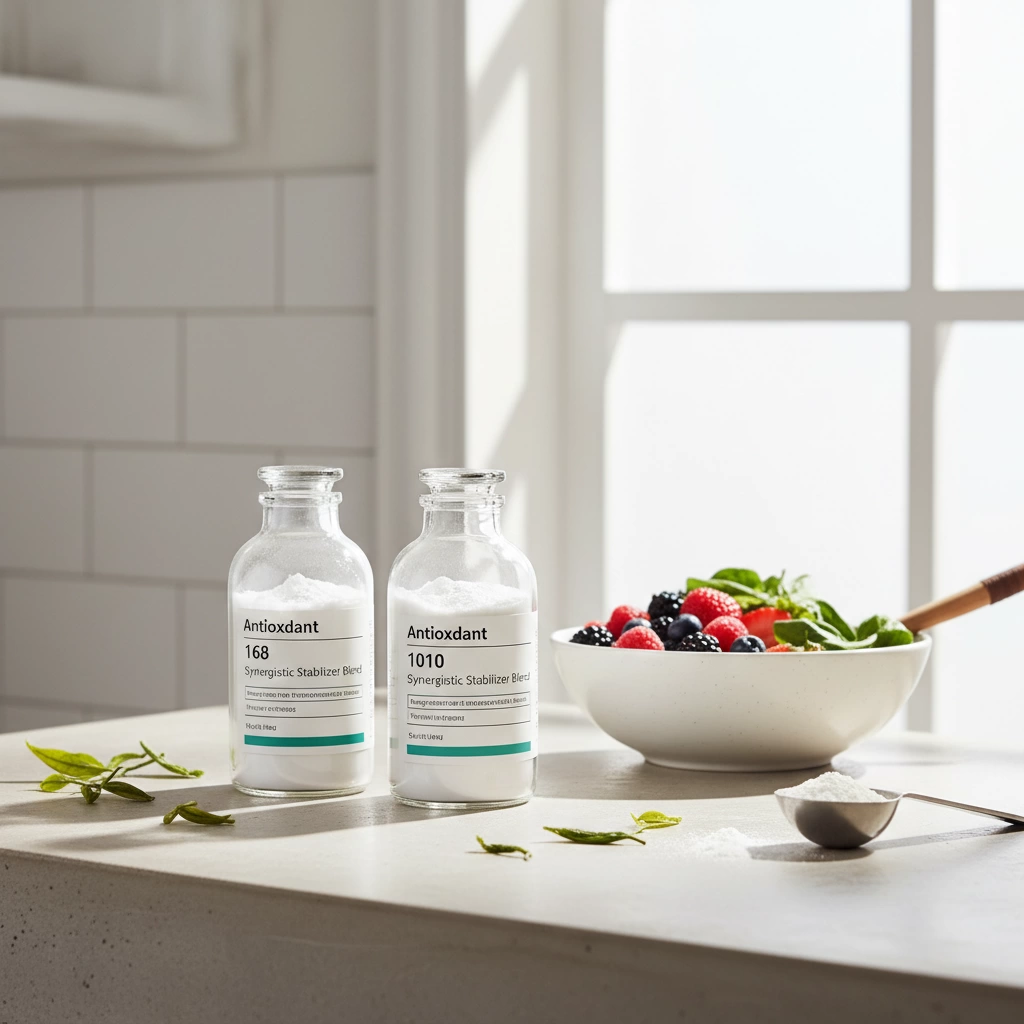
We rarely recommend using Antioxidant 168 entirely on its own for demanding applications. While it is a powerful secondary antioxidant, its performance is significantly amplified when paired with a primary hindered phenolic stabilizer, such as Antioxidant 1010. In the plastics industry, this combination is the gold standard for fighting polymer thermal degradation.
This partnership creates a “synergistic effect” where the total protection is greater than the sum of the parts. We often supply these as specific blends to target different stages of the polymer’s lifecycle:
- Processing Protection (Antioxidant 168): This phosphite stabilizer works effectively at high temperatures. It acts as a hydroperoxide decomposer, preventing the plastic from yellowing or losing its melt flow properties during extrusion and injection molding.
- Long-Term Stability (Antioxidant 1010): Once the part is molded, the primary antioxidant takes over to protect the material from oxidation during its service life.
By utilizing this Antioxidant 1010 synergy, manufacturers ensure their material survives the harsh heat of the factory floor and remains durable in the hands of the customer. Whether you are compounding polyolefins or engineering plastics, finding the right ratio between the phosphite and the phenolic is key to optimal cost-performance.
Industrial Applications and Usage Cases
Our Antioxidant 168 is a versatile workhorse in the polymer industry. Because it offers broad compatibility and resists high processing temperatures, it serves as a critical phosphite processing stabilizer across a wide array of materials. We supply this additive to manufacturers looking to protect their resins from oxidative degradation and discoloration during the melt phase.
Here is where Tris(2,4-di-tert-butylphenyl) phosphite delivers the most value:
- Polyolefins: It is a standard stabilizer for Polypropylene (PP), High-Density Polyethylene (HDPE), and Linear Low-Density Polyethylene (LLDPE), preventing yellowing and maintaining mechanical properties.
- Engineering Plastics: Due to its low volatility, it is ideal for high-heat polymers like Polycarbonates (PC), Polyesters (PET, PBT), and Polyamides (PA).
- Styrenics & Adhesives: We see extensive use in ABS compounds and various tackifier resins where maintaining the original melt flow rate is essential.
For most applications, we recommend a dosage level between 0.05% and 0.20%, depending on the specific resin and processing conditions.
Packaging, Storage, and Handling Guidelines
As a dedicated plastic additives supplier, we prioritize logistics that maintain the integrity of our chemicals from our warehouse to your facility. We package Antioxidant 168 to ensure it arrives in optimal condition, preventing contamination and moisture absorption during transit.
Standard Packaging Options
- 25kg Net Weight: We supply this product in robust paper bags or cartons.
- Moisture Protection: Every container includes PE liners to safeguard the powder or granules against humidity and environmental contaminants.
Storage Recommendations
To maximize shelf life and maintain the performance of this phosphite processing stabilizer, strictly adhere to the following storage protocols:
- Environment: Keep the product in a cool, dry, and well-ventilated area.
- Protection: Avoid direct exposure to sunlight and rain.
- Condition: Keep containers tightly closed when not in use to prevent hydrolysis issues, even though this grade offers superior hydrolytic stability.
For comprehensive safety details, personal protective equipment (PPE) requirements, and spill procedures, always consult the AO 168 SDS (Safety Data Sheet) before handling. Proper storage ensures the material remains free-flowing and effective for your compounding needs.
Why Choose Gotrays for Your Chemical Supply?
As a dedicated plastic additives supplier, we understand that your production line cannot afford downtime or inconsistency. When you source Antioxidant 168 from us, you are securing a partnership built on reliability and technical precision, not just buying a commodity. We treat your business needs as our own, ensuring that our supply chain integrates seamlessly with yours.
We prioritize three core pillars to support your manufacturing operations:
| Service Pillar | Benefit to Your Business |
|---|---|
| Batch-to-Batch Consistency | We guarantee strict adherence to specifications (Assay ≥ 99.0%), ensuring the exact same performance in every bag to prevent processing variances. |
| Global Logistics Support | Our optimized supply chain handles the complexities of international shipping, ensuring timely delivery of chemical supplies to your facility anywhere in the world. |
| Technical Expertise | We provide accessible lab support and formulation advice, helping you calculate the ideal dosage and synergistic blends for your specific polymer applications. |
We are committed to delivering high-performance stabilizers that keep your material quality high and your processing costs low.
Frequently Asked Questions (FAQs)
Is Antioxidant 168 suitable for food contact applications?
This is one of the most common inquiries we receive from manufacturers producing food packaging materials. Tris(2,4-di-tert-butylphenyl) phosphite is widely recognized in the industry for its safety profile in polymer processing. However, specific regulatory compliance can vary based on dosage and regional standards. We always recommend reviewing the specific SDS and Technical Data Sheet (TDS) provided with our shipments to ensure the product meets the exact safety requirements for your intended end-use application.
What are the best solvents for dissolving CAS 31570-04-4?
You cannot dissolve this additive in water, as it is completely insoluble. To integrate Antioxidant 168 effectively into a liquid solution or masterbatch carrier, you must use organic solvents. Based on our technical data, it demonstrates excellent solubility in toluene and hexane.
How does AO 168 compare to other phosphite stabilizers?
The standout feature of this product is its hydrolytic stability. Many phosphite processing stabilizers are sensitive to moisture and can degrade or “cake” when exposed to humidity during storage. Antioxidant 168 offers superior resistance to hydrolysis compared to other common phosphites, ensuring it remains free-flowing and effective even after storage in standard warehouse conditions.
Can I use this product on its own to prevent degradation?
While it is a powerful hydroperoxide decomposer, it is technically defined as a secondary antioxidant. It performs best when protecting the polymer during the high heat of processing (extrusion or molding). For long-term thermal stability throughout the product’s life, we strongly advise using it in synergy with a primary hindered phenolic stabilizer, such as Antioxidant 1010 or 1076.

Reviews
There are no reviews yet.